

We often think competition is loud. We picture rankings, direct disputes, open comparison, and visible winners. But much of it is quiet. It happens in the mind, in glances, in small reactions, and in the stories we tell ourselves about where we stand.
Silent competition is the hidden habit of measuring our worth against other people without saying it out loud.
We see it in daily life. A friend shares good news, and we smile, but something inside tightens. A colleague speaks with confidence, and we begin to doubt our own pace. A sibling seems more settled, and we start asking why our path looks different. No one declared a contest. Still, we feel one.
This quiet process can shape self-perception in deep ways because it does not stay at the level of behavior. It enters identity. It tells us that our value depends on position, speed, or recognition. Over time, we may stop asking, “What is true for us?” and start asking, “How do we compare?”
Comparison can become a private judge.
Why silent competition starts
In our experience, silent competition rarely begins with vanity alone. It often grows from insecurity, fear of being left behind, and the wish to feel safe in a world where status seems to matter. When we are unsure of our own place, we look sideways.
This is not random. Research based on a large international survey of students across 73 countries found that perceived competition is shaped not only by the environment, but also by traits such as competitiveness, fear of failure, and self-efficacy. That means two people can face the same setting and feel it in very different ways. The outer scene matters, but the inner structure matters too.
That finding helps us see something simple. Silent competition does not always come from what others are doing. Sometimes it comes from the meaning we attach to what they are doing.
We may be carrying beliefs such as:
If others move ahead, we lose value.
If we are not noticed, we do not matter.
If our path is slower, it is weaker.
These beliefs are rarely spoken clearly. Still, they direct many emotional reactions.
How it enters self-perception
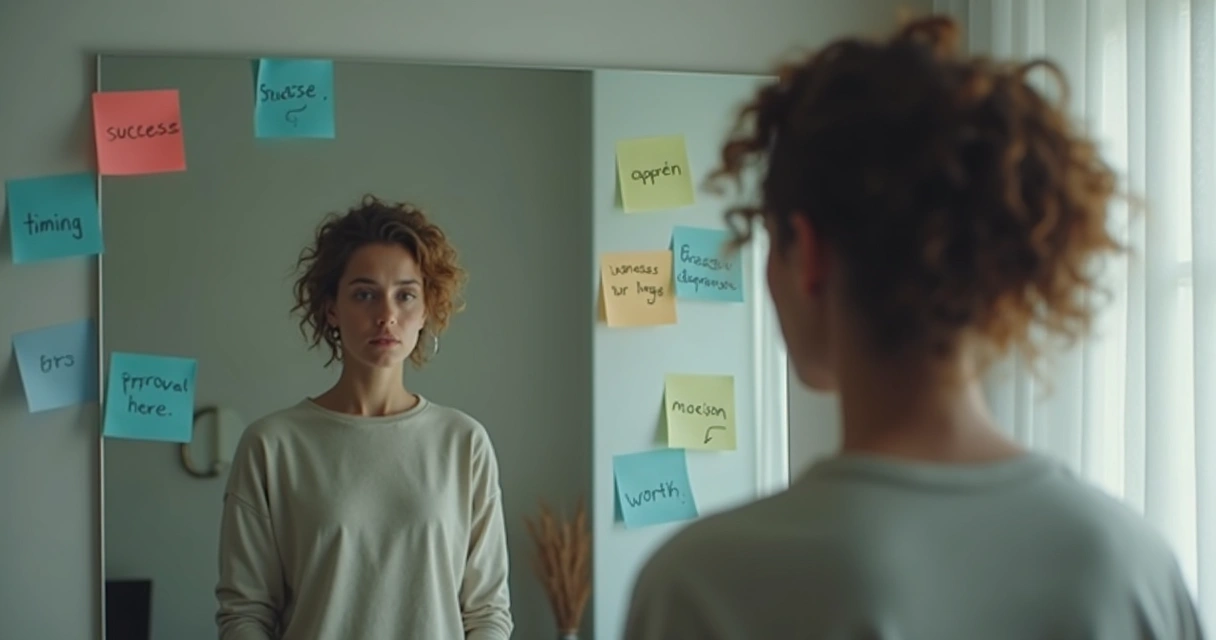
Self-perception is not built only from facts. It is built from interpretation. We do not just see what happens. We give it meaning. Silent competition changes that meaning by turning another person’s experience into a mirror for our own judgment.
When self-perception becomes comparative, identity grows unstable.
One day we feel capable because we seem ahead. The next day we feel small because someone else shines. Our worth starts rising and falling with external movement. This creates an exhausting inner climate.
We once saw this clearly in a simple scene. Someone had worked hard on a personal project for months. They felt proud, calm, and connected to what they had built. Then they saw another person receive praise for something similar. In a few minutes, joy turned into agitation. Nothing had changed in the project itself. What changed was the frame. Pride gave way to comparison.
That is how silent competition works. It edits perception without asking permission.
Some common effects on self-perception include:
Difficulty recognizing our own progress
Harsh self-judgment after others succeed
Feeling behind even without clear reason
Confusing visibility with value
These effects may look small at first. With time, they can become part of how we define ourselves.
Signs we may be in silent competition
Silent competition is easy to miss because it often hides behind normal social contact. We may call it ambition, awareness, or standards. Sometimes it is. Sometimes it is not.
We tend to notice silent competition when a person’s success produces more self-questioning than inspiration. That reaction is a clue.
Here are signs that deserve honest attention:
We scan other people’s progress to judge our own.
We feel relief when someone else struggles.
We have trouble celebrating others without inner tension.
We tie our peace to being ahead, admired, or chosen.
We feel pushed to perform even when our real need is rest.
Silent competition often shows itself through emotional reactions that seem bigger than the situation.
That matters because emotions reveal hidden structure. Envy, irritation, shame, and urgency are not moral failures by themselves. They are signals. If we listen well, they tell us where our self-worth has become entangled with comparison.
Why it can harm relationships
This pattern does not stay inside us. It changes how we relate. When silent competition grows, people stop being people and become measures. We do not meet them as they are. We place them on an inner scale.
That can lead to distance, guardedness, and hidden resentment. It becomes harder to be present. Harder to admire. Harder to learn. Even affection can become mixed with unease.
We may also begin to perform a version of ourselves just to protect our image. That creates another problem. If our relationships are based on display rather than truth, we feel unseen even when we receive attention.
What is hidden still shapes the bond.
A quiet rivalry can exist in friendships, families, work teams, and romantic life. No one names it. Yet everyone feels its pressure.
How we can loosen its grip
The way out is not to stop noticing other people. It is to stop using them as the main tool for self-definition. That takes practice, and it asks for honesty.
We can begin with a few grounded moves:
Name the comparison when it starts. A clear sentence helps, such as: “We are turning their path into a judgment about ours.”
Separate facts from meaning. Their success is a fact. Our assumed inferiority is an interpretation.
Return to personal criteria. Ask what growth, truth, and alignment mean for our own life.
Notice the fear under the rivalry. It is often fear of not mattering, not belonging, or not being enough.
This work is not about becoming passive. It is about becoming free. We can still admire excellence, seek growth, and learn from others. But we do it without handing over our inner center.

Building a steadier self-view
A steadier self-view grows when we know how to witness ourselves without turning every difference into a ranking. This means we learn to hold both truths at once: others have their path, and we have ours.
Self-knowledge weakens silent competition because it gives us a ground that does not depend on constant comparison.
We start seeing our patterns with less drama and more clarity. We notice where old wounds seek proof. We notice where fear dresses itself as ambition. We notice where admiration can replace rivalry.
That shift is quiet, but real. We become less reactive and more rooted. Other people’s light stops feeling like a threat. It becomes information, sometimes inspiration, sometimes just their own story.
Conclusion
Silent competition shapes self-perception by making our worth feel conditional. It teaches us to read life as a ranking, even when no ranking exists. When this habit takes hold, we lose contact with our own pace, values, and process.
The good news is that what is hidden can be seen. And what is seen can be worked through. When we recognize silent competition in ourselves, we are not failing. We are becoming more honest. That honesty opens space for a more stable form of self-respect, one that does not depend on being above anyone else.
If we want a clearer inner life, we need more than confidence. We need truth. Quiet, firm, and lived truth.
Frequently asked questions
What is silent competition?
Silent competition is the private act of comparing our worth, progress, or value to other people without any open contest being declared. It often happens through thoughts, emotional reactions, and inner judgment.
How does silent competition affect self-esteem?
It can make self-esteem unstable because our sense of value starts depending on how we think we rank. When others do well, we may feel reduced, even if our own path is still valid and growing.
Can silent competition be healthy?
In small doses, it can reveal desires, standards, or unrealized goals. But it is only healthy when it leads to self-awareness and growth, not when it feeds envy, shame, or chronic self-doubt.
How to recognize silent competition signs?
We can recognize it by noticing tension around other people’s success, a constant urge to measure ourselves, difficulty celebrating others, or a habit of treating life like a hidden ranking system.
How can I overcome silent competition?
We can overcome it by naming the pattern, separating facts from interpretation, returning to our own values, and working on the fears beneath comparison. With practice, self-worth becomes less dependent on where others stand.