
We often speak about growth as if it were only change. New habits. New goals. New insight. But growth without ethics can become polished self-deception. We may learn how to speak better, perform better, or look more balanced, while still avoiding truth, misusing power, or harming others in subtle ways.
Personal ethics in self-growth means choosing who we are becoming, not just what we are achieving.
In our experience, this is where many people pause. They start with honest hope, then meet a hard question: if we want to grow, by what inner standard will we guide that growth? Not every form of change is healthy. Not every desire is wise. Not every win is clean.
Personal ethics gives shape to inner work. It helps us tell the difference between healing and escape, confidence and arrogance, honesty and cruelty. It also keeps self-knowledge tied to responsibility. That matters.
What personal ethics really means
Personal ethics is the set of values and principles we choose to live by, especially when no one is watching. It is not a public image. It is not a slogan. It is the daily line between what we will do and what we will not do.
We think many people first meet ethics through rules from family, school, religion, or culture. That is normal. Yet authentic self-growth asks for more than inherited rules. It asks us to examine them. Which values deepen our humanity? Which ones came from fear, control, or the need to please?
A Pew Research Center report on morality and belief showed that many adults do not see belief in God as a requirement for good values. We read this as a sign that people are trying to ground ethics in conscious responsibility, not only in external authority.
Ethics begins in honesty.
That honesty includes asking uncomfortable things:
Do we tell the truth when it costs us?
Do we respect limits, both our own and those of others?
Do we seek growth to become freer, or to feel superior?
These questions are not meant to shame us. They help us see clearly. And clear sight is where ethical growth starts.
Why self-growth needs an ethical base
Without an ethical base, self-growth can turn into self-absorption. We may become more skilled at explaining ourselves while becoming less willing to face impact. We may protect our comfort and call it boundaries. We may avoid commitment and call it freedom.
Growth becomes authentic when inner change also improves the way we relate, choose, and repair.
We once heard a person say, “I am just being true to myself,” after breaking trust with someone close. The sentence sounded strong. But when we looked closer, it was not truth. It was impulse dressed as wisdom. That distinction matters in real life.
An ethical base helps us weigh at least four things at once:
Our intentions
Our actions
The impact on others
The long-term shape of our character
This wider view keeps self-growth from becoming narrow. It reminds us that we do not mature in isolation. We grow inside relationships, work, family, and society.
How to build personal ethics from the inside
Ethics becomes real when we move from vague ideals to lived practice. In our view, this process is quiet and steady. It rarely feels dramatic. Still, it changes everything.
We can begin with a simple sequence.
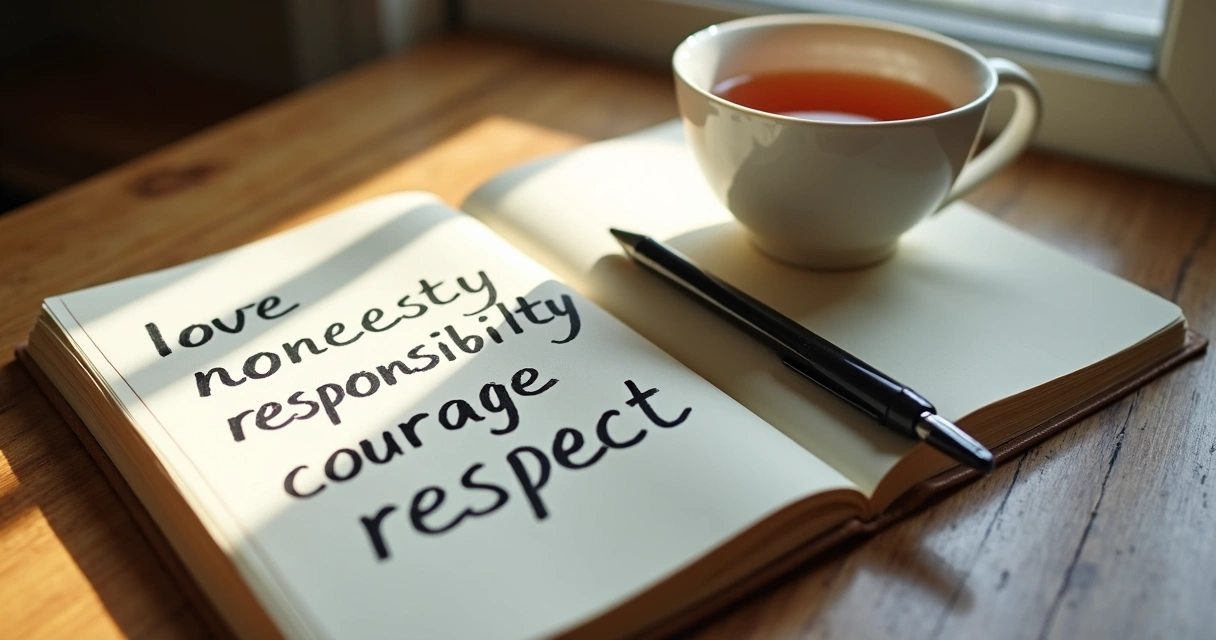
Name the values we want to live by. Words like honesty, fairness, patience, loyalty, humility, and accountability are useful only if we define what they mean in action.
Look at our patterns. Where do we betray those values under stress, fear, envy, or the need for approval?
Set small standards. For example, we may choose not to promise what we cannot sustain, not to hide mistakes, and not to use silence as punishment.
Review our choices often. Ethics is not built once. It is built through repetition.
A Pew Research Center study on adult learning and personal growth found that many adults actively seek new knowledge and growth. We see this as hopeful. The desire to learn is strong. The next step is to make sure learning forms character, not only opinion.
It also helps to write personal ethical statements. Short ones. Clear ones. For example:
We will speak truth without using truth as a weapon.
We will admit harm without rushing to defend our image.
We will not confuse intense feelings with moral permission.
These kinds of statements can guide us when emotions are loud and clarity is low.
The tension between authenticity and excuse
Many people fear ethics will make them rigid or false. We understand that fear. Some were taught morality in ways that left no room for emotion, complexity, or doubt. But healthy ethics does not erase our inner life. It helps us hold it with care.
Authenticity is not doing whatever we feel. It is acting in ways that match both truth and responsibility.
That means we can be honest without being harsh. We can protect our peace without becoming indifferent. We can change our minds without losing integrity.
Here is where growth gets real. A person may say, “This is just how I am.” We all know the tone. Final. Closed. But mature ethics invites another response: “This is how I have been. Now I need to choose what I will reinforce.”
Character is built in repetition.
This shift is quiet, but deep. It turns identity from an excuse into a responsibility.
Common traps that distort ethical growth
Even sincere people get lost. We do too, at times. Ethical growth asks for humility because distortion can appear in respectable forms.
Some of the most common traps are these:
Moral vanity, when we enjoy feeling better than others more than we enjoy becoming better ourselves.
Selective honesty, when we confess what is easy but hide what threatens our image.
Emotional absolutism, when strong feelings are treated as final proof.
Borrowed values, when we repeat noble words that have not yet entered our conduct.
One small story comes to mind. A person spent months learning about boundaries and self-respect. Good work. Yet every hard talk ended with blame, distance, and no ownership. The language was new, but the pattern was old. That can happen to any of us. Growth in language is not the same as growth in ethics.

Conclusion
Authentic self-growth is not only about becoming more aware. It is about becoming more trustworthy in our own eyes. Personal ethics gives direction to that process. It teaches us to align reflection with conduct, freedom with limits, and self-respect with respect for others.
We think the deepest kind of growth is not loud. It appears in cleaner motives, steadier choices, and a greater willingness to repair what we damage. It does not make us perfect. It makes us more answerable.
If we want growth that lasts, we must ask not only who we want to be, but also what kind of person our choices are training us to become.
Frequently asked questions
What are personal ethics in self-growth?
Personal ethics in self-growth are the values and principles that guide how we change, choose, and relate to others. They help us grow with honesty, responsibility, and respect instead of chasing change for image or comfort alone.
How to develop authentic personal ethics?
We can develop authentic personal ethics by naming our values, checking our behavior against them, noticing where fear or ego distorts our choices, and practicing clear standards in daily life. Writing a few short personal commitments can also help turn ideals into action.
Why are ethics important for growth?
Ethics matters for growth because it gives direction to change. Without it, self-growth can become self-justification, avoidance, or vanity. Ethics helps us judge not only what feels right, but also what is responsible and fair.
Can ethics change during self-growth?
Yes, ethics can change during self-growth. As we mature, we may question inherited rules, refine our values, and adopt a more conscious moral stance. The goal is not to abandon ethics, but to make it more thoughtful, honest, and lived.
What are common challenges in ethical growth?
Common challenges include rationalizing harmful behavior, wanting approval, avoiding guilt, confusing feelings with truth, and using moral language without real change in conduct. These challenges are common, which is why regular self-review and humility are so helpful.