
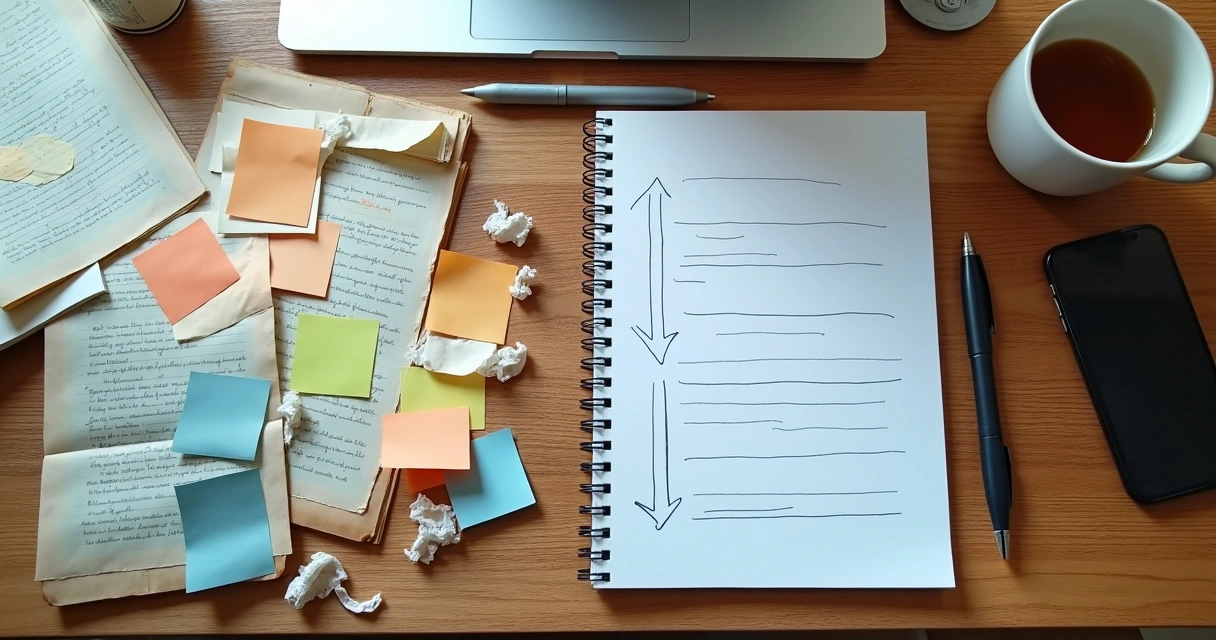
We all know the strange weight of standing still while our mind keeps moving. A choice is in front of us, yet nothing happens. We compare, predict, doubt, and delay. Hours pass. Sometimes days. The problem is not always the decision itself. Often, it is the inner noise around it.
Decision paralysis happens when thinking no longer supports choice and starts blocking it.
In our experience, this state does not come from lack of intelligence. It often comes from too many possibilities, fear of regret, emotional pressure, or the hope of finding a perfect answer. We want certainty before we move. Life rarely gives that.
We once spoke with someone who spent weeks trying to choose between two job paths. On the surface, it looked like a career issue. Beneath it, there was fear of disappointing family, fear of choosing wrong, and an old habit of needing approval. The stuck point was not just external. It was personal. That is why real clarity asks for more than a list of pros and cons.
Why our mind freezes
When the mind is overloaded, it does not always become sharper. It can become narrower. A behavioral study on indecisiveness under cognitive load found that highly indecisive people inspected far less of the available information and explored fewer dimensions of a choice. In simple terms, too much pressure did not make them think better. It made them think less broadly.
This matters because many of us react to paralysis by adding more input. More advice. More tabs open. More scenarios. More notes. Yet the issue may be mental saturation, not lack of data.
Too much thought can reduce clear thought.
We also freeze when a decision becomes tied to identity. If we believe one choice will prove our worth, define our future, or expose our weakness, the emotional charge rises fast. A simple decision becomes a test. Then hesitation grows.
What decision paralysis usually hides
Not every delay means the same thing. Sometimes we need more time. But sometimes paralysis hides inner conflicts that are worth naming.
We often see these patterns:
- Fear of making a mistake and having to live with regret.
- Need for the perfect option, even when none exists.
- Confusion between what we want and what others expect.
- Tiredness, stress, or emotional overload that weakens judgment.
- Old habits of self-doubt that return in moments of choice.
Clarity grows when we stop treating all hesitation as a logic problem.
Some choices are difficult because they touch pain, loss, or change. If we ignore that, we can become harsh with ourselves. We say, “I should know by now.” Yet what we may need is not pressure, but honesty.
Simple steps to regain clarity
Clarity does not always arrive in one grand moment. Often, it returns in small acts that calm the mind and reconnect us with what matters.
Reduce the decision size
A big choice can feel impossible when framed all at once. So we can make it smaller. Instead of asking, “What should I do with my life?” we can ask, “What is my next honest step this week?”
This shift lowers internal pressure. It also brings movement back.
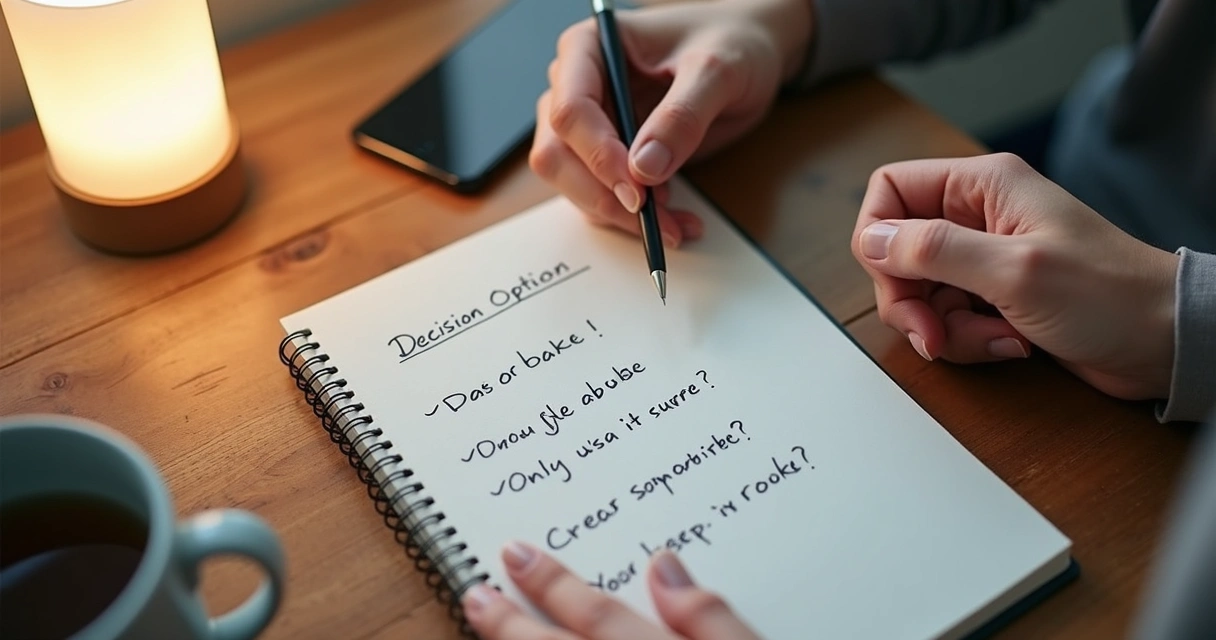
A useful sequence is this:
- Name the exact decision.
- Set a time limit for reflection.
- List only the top two or three real options.
- Write the main cost and gain of each.
That is enough to begin. Not everything needs a large process.
Separate facts from fear
When we feel stuck, facts and imagined outcomes often blend together. We may say, “If I choose this, everything will collapse.” But is that a fact, or a fear story?
We like to use two short questions:
- What do we know for sure?
- What are we predicting without evidence?
- What part of this fear belongs to the present, and what part comes from old experience?
This does not remove emotion. It gives emotion its right place. That alone can restore perspective.
Listen to the body
The body often signals what the mind keeps circling. Tight chest. Heavy stomach. Jaw tension. Sudden fatigue. These signs do not decide for us, but they show where the inner friction lives.
If our body is in constant alarm, clear judgment becomes harder.
Before making a choice, we can pause for a few minutes. Slow breathing. A short walk. Silence. Pen and paper. These plain actions help the nervous system settle. And a settled system sees more clearly.
We have seen people force decisions while exhausted, only to realize later they were not confused. They were depleted.
Choose by values, not mood
Mood changes fast. Values are steadier. When we do not know what to choose, it helps to ask which option is more aligned with the kind of person we want to be.
We can reflect on questions like these:
- Which option respects our truth?
- Which option supports growth, even if it feels hard?
- Which option keeps us coherent with our deeper commitments?
This is where many people regain direction. Not because the choice becomes easy, but because it becomes meaningful.

When clarity still does not come
Sometimes we do the inner work and still feel uncertain. That does not always mean we are failing. It may mean the choice carries real loss. Many decisions are not between good and bad. They are between two goods, or two costs.
Some choices hurt because they are real.
In such moments, we do not need false certainty. We need enough honesty to move. A mature decision is not one made without fear. It is one made with awareness, responsibility, and acceptance that no path is free from limits.
We regain clarity when we stop waiting to feel perfect and start choosing with presence.
Conclusion
Decision paralysis can make us feel weak, but it often reveals something more human. We are trying to protect ourselves from pain, error, or regret. That is understandable. Still, staying stuck has its own cost. Life begins to shrink around avoided choices.
We can respond differently. We can slow down, reduce noise, name our fears, and return to what truly guides us. Clarity is not always a flash of certainty. Often, it is a quieter thing. A grounded next step. A clean sentence on paper. A choice we can stand behind, even with some doubt still present.
If we treat decisions as moments of awareness, not just performance, we begin to trust ourselves again. And that trust changes everything.
Frequently asked questions
What is decision paralysis?
Decision paralysis is a state where we struggle to choose because the mind becomes overloaded by options, fear, or pressure. Instead of helping us decide, thinking turns into a block.
How can I stop decision paralysis?
We can stop decision paralysis by making the choice smaller, limiting options, setting a decision deadline, and separating facts from fear. It also helps to calm the body before trying to decide.
What causes decision paralysis?
Common causes include fear of regret, perfectionism, mental overload, emotional stress, and conflict between personal values and outside expectations. In some cases, tiredness and self-doubt also play a large role.
Are there quick ways to gain clarity?
Yes. We can step away for a brief pause, write down the real options, remove extra input, and ask what matters most right now. Quick clarity often comes from reducing noise, not adding more information.
Is overthinking the same as decision paralysis?
Not exactly. Overthinking is the habit of excessive mental looping. Decision paralysis is what happens when that looping blocks action. They are linked, but they are not the same thing.