

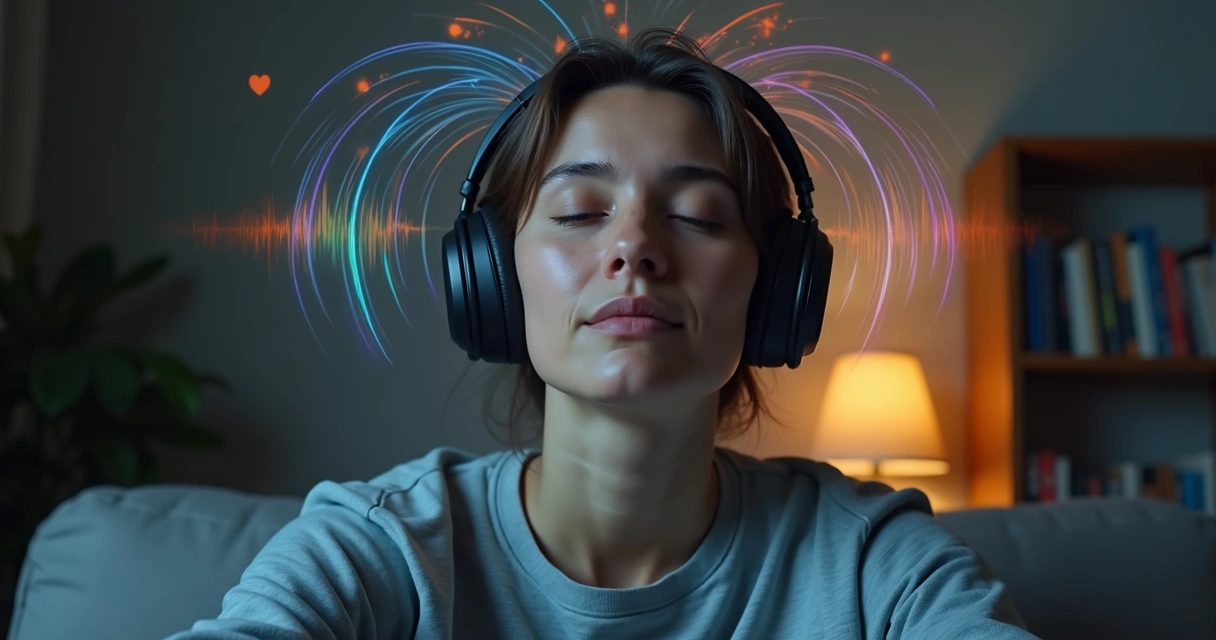
We have all had that moment. A song starts, and something inside us shifts. Our breathing slows. Our chest softens. Or the opposite happens. A memory rises fast, and we feel tense before we even understand why.
Music does not only entertain us. It helps us notice what is alive in us. It can calm, stir, focus, unsettle, comfort, or clarify. That is why music has such a strong link with emotional regulation and self-awareness.
Music affects emotional regulation because it changes how we feel, how we interpret feelings, and how we respond to them.
When we speak about emotional regulation, we are not talking about controlling emotions as if they were a problem. We are talking about relating to them with more consciousness. In our view, music can support this process because it creates space between feeling and reaction.
Why music reaches us so deeply
Music acts on several layers at once. Rhythm can affect the body. Melody can color mood. Lyrics can give language to what we could not name. Sometimes we do not know we are sad until a song makes that sadness visible.
This matters because many people live on autopilot. They rush through the day, collect tension, and only notice their inner state when it spills out into conflict, withdrawal, or fatigue. Music can interrupt that pattern. Briefly, but powerfully.
Music often reveals before it relieves.
In our experience, this is one of its strongest functions. Before music helps regulate emotion, it often helps us detect emotion. That detection is the first step in self-awareness.
Music and emotional regulation in daily life
Emotional regulation means noticing what we feel, making room for it, and choosing a response that does not deepen inner disorder. Music can support this in simple ways, especially when used with intention.
Listening with awareness can turn music from background noise into a tool for inner organization.
A broad meta-analysis of music-based interventions across 46 studies found a moderate and reliable positive effect on emotional regulation, along with reduced depression and anxiety symptoms. What stands out is not one single method, but the consistency. Listening, therapeutic settings, mindfulness, and self-directed use all showed value.
That makes sense to us. Music offers more than distraction. It can help us process emotional states instead of avoiding them. But the effect depends on how we use it.
We can think of three common ways music supports regulation:
It soothes activation when we feel overwhelmed or restless.
It helps us contact emotions that we have pushed aside.
It gives structure to inner transitions, such as grief, reflection, rest, or renewed focus.
Still, not every use of music helps. Some people use it to numb themselves. Others keep repeating songs that intensify anger or sadness without reflection. Music can regulate, but it can also trap us in a mood when used without awareness.

How music builds self-awareness
Self-awareness grows when we can observe our inner patterns without running from them. Music helps because it can bring hidden material closer to the surface in a form we can bear.
Sometimes a song speaks to our current state. Other times it reveals an old wound, a longing, or a repeated story about ourselves. We may notice that we always choose intense music when we feel rejected, or silent piano when we are exhausted, or fast beats when we are trying not to feel at all.
These choices are not random. They can show us how we meet our own experience.
Our music habits can reflect our emotional habits.
A study from Monash University on music engagement and emotion-regulation strategies showed that well-being is shaped not just by what people listen to, but by how they use music. Strategies such as reappraisal or suppression change the outcome. In simple terms, habitual and purposeful listening do not produce the same inner effects.
This is a strong point for self-knowledge. If we observe our listening patterns, we may start to see:
What emotions we allow and which ones we resist.
Whether we seek relief, escape, expression, or clarity.
Which memories or personal meanings are tied to certain songs.
How our body responds before our mind forms an explanation.
That kind of noticing can be surprisingly honest. A playlist can tell the truth about us before we say it out loud.
When music helps and when it does not
We think it is helpful to avoid romantic ideas here. Music is not automatically healing. It is powerful, yes, but power can move in different directions.
Helpful use often includes attention, pacing, and honesty. Harmful use often includes compulsion, emotional looping, or avoidance.
For example, if we are grieving, a slow song may help us stay present with pain in a tolerable way. But if we repeat the same song for hours only to deepen despair, that is different. The same music can support awareness or intensify fixation.
We usually benefit more when we ask a simple question: what is this song helping me do right now?
The answer may be clear:
It is calming my body.
It is helping me cry.
It is keeping me angry.
It is helping me put words to confusion.
That small pause changes everything. It brings choice into the process.

Practical ways to use music with more awareness
We do not need a complex method to make music more useful in inner life. We just need more presence.
One simple practice is to match music to a real need rather than a vague impulse. Another is to listen without doing five other things at once. Even five minutes can teach us something.
We suggest a short sequence:
Pause and name your current state in one or two words.
Choose music that either supports that state gently or helps shift it with care.
Notice body signals while listening, such as breathing, pressure, warmth, or restlessness.
After the song, ask what changed, what stayed, and what became clearer.
This kind of practice turns listening into observation. It is subtle, but real. Over time, we may notice patterns in our emotional life that were hidden inside routine.
Conclusion
Music impacts emotional regulation and self-awareness because it reaches feeling, memory, thought, and the body at the same time. It can calm us, help us express what is hard to say, and show us how we usually deal with inner tension.
Used with care, music becomes more than comfort. It becomes a mirror. Not a perfect one, but a living one. It reflects our state, our habits, our unmet needs, and sometimes our next honest step.
When we listen consciously, we are not just hearing songs. We are hearing ourselves more clearly.
Frequently asked questions
What is emotional regulation in music?
Emotional regulation in music is the use of music to influence how we feel and how we respond to those feelings. This can include calming stress, processing sadness, easing anger, or creating steadier inner states. It works best when we listen with intention instead of using music only as distraction.
How does music improve self-awareness?
Music improves self-awareness by helping us notice emotions, memories, and patterns that may stay hidden during daily routine. A song can reveal what we are feeling, what we avoid, and what meanings we attach to certain experiences. This makes inner observation easier and more direct.
What music genres help with emotions?
Different genres can help with emotions depending on the person and the moment. Calm instrumental music may support rest, while acoustic songs may help reflection, and rhythmic music may help release tension. The best choice depends less on genre alone and more on how the music affects our body, thoughts, and mood.
Can music reduce stress and anxiety?
Yes, music can reduce stress and anxiety for many people. Research has shown that music-based approaches are linked with better emotional regulation and lower anxiety symptoms. Slower tempo, familiar songs, and mindful listening often help the body settle and make emotional pressure feel more manageable.
How to use music for mood changes?
We can use music for mood changes by first noticing our current emotional state, then choosing songs that either support gentle expression or guide a gradual shift. It helps to listen with full attention, observe body reactions, and reflect after a few songs. This makes mood change more conscious and less impulsive.